Job Title Co-Director, K. Lisa Yang Center for Bionics
K. Lisa Yang Center for Bionics
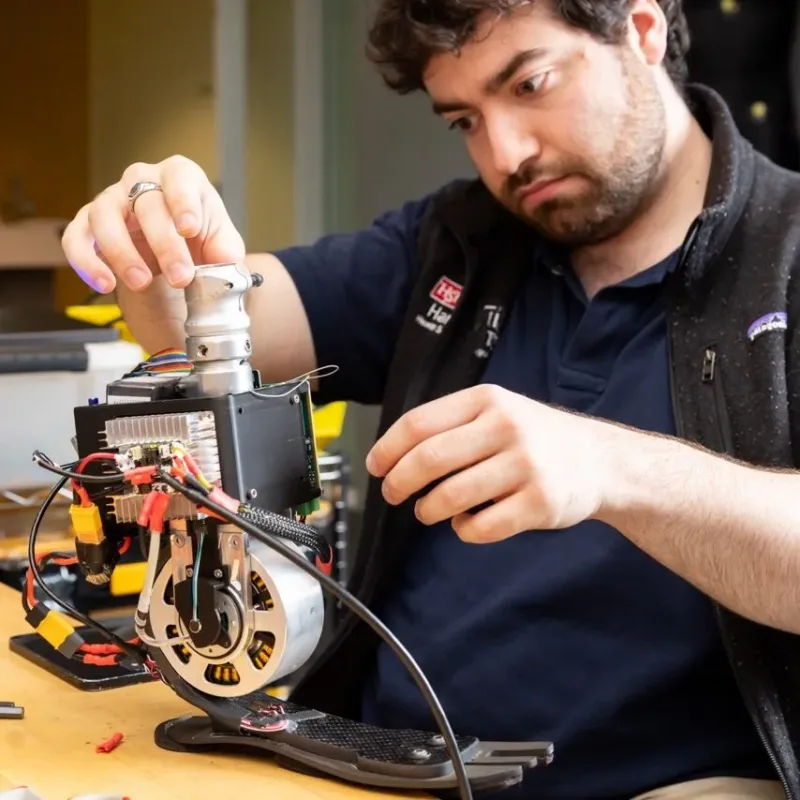
The K. Lisa Yang Center for Bionics pioneers transformational bionic interventions across a broad range of conditions affecting the body and mind. Based on fundamental scientific principles, the center develops neural and mechanical interfaces for human-machine communications; integrates these interfaces into novel bionic platforms; performs clinical trials to accelerate the deployment of bionic products by the private sector; and designs platforms and programs to expand equitable access to the latest prosthetic and bionic technologies for all who need them, particularly individuals in developing countries.
Our Approach
The goal of the Yang Center for Bionics is clear: through the development and deployment of groundbreaking bionic technologies, we seek to create a world where every individual has the right to live without unwanted disability. By integrating advances in neuroscience, mechanical engineering, robotics, surgery, and materials science, the center is translating breakthrough technologies from the laboratory to the clinic in order to restore mobility, sensation, and independence for millions of people worldwide.
Designed to be deeply interdisciplinary, the center unites experts from three MIT schools to shape the future of bionics: Science, Engineering, and Architecture and Planning. Our researchers collaborate with clinical and surgical collaborators at Harvard Medical School and MGB to advance and test our technologies in patients.
Since its launch in 2021, the center has pioneered several breakthrough technologies, including a neural-controlled bionic leg, a tissue-integrated bionic knee that restores natural movement, and a living biohybrid implant that uses rewired nerves to revive paralyzed organs.
Co-Directors

Job Title Co-Director, K. Lisa Yang Center for Bionics
Our Research
Yang Center for Bionics research spans next-generation prosthetics, neural interfaces, digital nervous systems, and scalable rehabilitation technologies designed to restore movement, independence, and quality of life for people around the world. Our researchers have made significant strides in the design of bionic technologies, including a successful trial of a neural-controlled prosthetic limb.
Bionic limb Reconstruction
In 2024, the center introduced the first brain-controlled prosthetic limb, allowing patients to receive neural feedback and control a prosthetic leg more naturally. The team later applied the approach to a tissue-integrated bionic knee and is adapting it for upper-limb amputations.
Digital Nervous System
Researchers are developing a digital nervous system to reduce movement limitations from spinal cord injuries by using computer-controlled muscle activation to move limbs while promoting spinal cord repair.
Brain-Controlled Limb Exoskeletons
Researchers are developing brain-controlled limb exoskeletons to assist weakened muscles and restore natural movement for people affected by stroke and musculoskeletal disorders.
Strengthening Sierra Leone’s Orthotics & Prosthetics Sector
Partnering with Sierra Leone’s Ministry of Health, we are strengthening the country’s O&P sector by training clinicians and technicians, building a high-volume international supply chain, and connecting people with physical disabilities to essential care and support services.