Job Title Director, K. Lisa Yang Integrative Computational Neuroscience (ICoN) Center
K. Lisa Yang ICoN Center
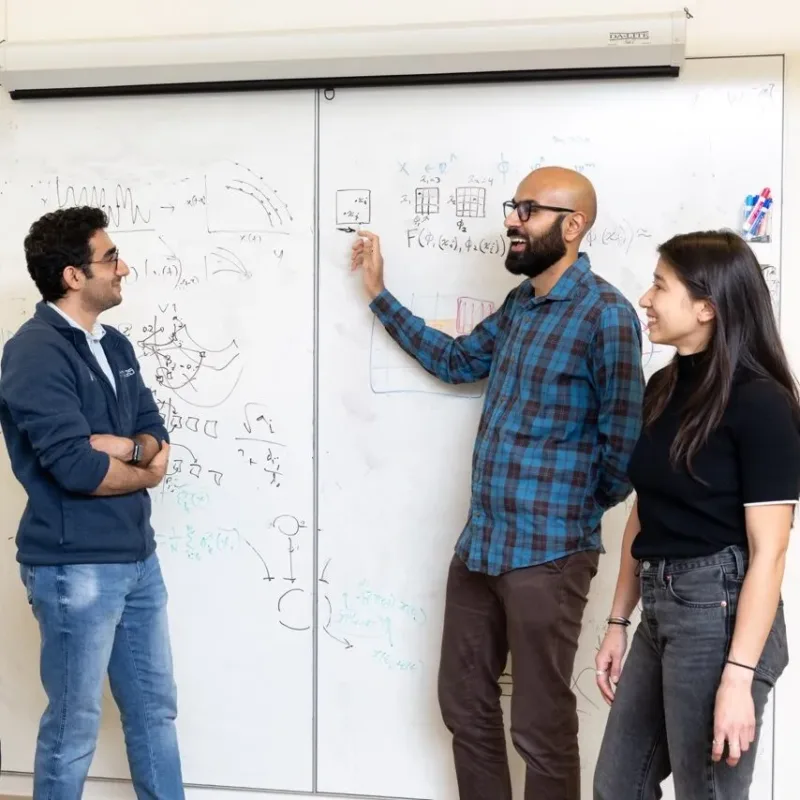
The K. Lisa Yang Integrative Computational Neuroscience (ICoN) Center pioneers computational models of brain function that unify multiple levels of biological data, from molecules to circuits to behavior. The center provides an exceptional learning and research environment for the world’s brightest young scientists and engineers, enabling them to gain a rich foundation in theoretical and computational neuroscience and collaborate in the creation of integrative models vital to a holistic understanding of human brain function and fundamental scientific discoveries.
Our Approach
The ICoN Center is premised on the idea that understanding complex electrical neural interactions within distributed circuits across the brain will be essential to understanding the brain and treating brain disorders. ICoN is building integrative models in four areas, starting with neural circuit models of behavior and the analysis of data at multiple scales, and adding increasing detail so that the models span multiple adjacent levels of description, from genes and molecules to cells to circuits to behavior.
Computational models and foundational discoveries emerging from the K. Lisa Yang ICoN Center have been published in leading scientific journals including Nature, Science, Cell, Neuron, and PNAS.
Director

Our Research
Our research integrates computational neuroscience, machine learning, and advanced experimental approaches to understand how neural circuits and brain-wide dynamics give rise to behavior, cognition, communication, and movement.
Behavior
Computational, statistical, and neural network approaches are used to study how brain-wide dynamics integrate perception, cognition, memory, breathing, and consciousness to shape behavior, learning, decision-making, and transitions between healthy and disordered brain states.
Brain Connectivity
Center researchers use electron microscopy, in vivo imaging, spatial transcriptomics, and computational methods to map neural circuits for breathing and vocal-respiratory coordination at synaptic resolution, while modeling brain-wide activity and plasticity with circuit-specific imaging.
Cognition
Center researchers develop computational and neural network models of language, learning, and social cognition, studying how the brain supports multilingual language comprehension, biological learning, and Theory of Mind processes such as inferring others’ thoughts, knowledge, and pain.
Motor Control
Researchers are investigating neural computations underlying locomotion, dexterity and how to improve neural interfaces in amputees to improve the efficacy of artificial limbs manipulate objects with human-like skill and adaptability.