Job Title Co-Director, K. Lisa Yang and Hock E. Tan Center for Molecular Therapeutics in Neuroscience
K. Lisa Yang and Hock E. Tan Center for Molecular Therapeutics in Neuroscience
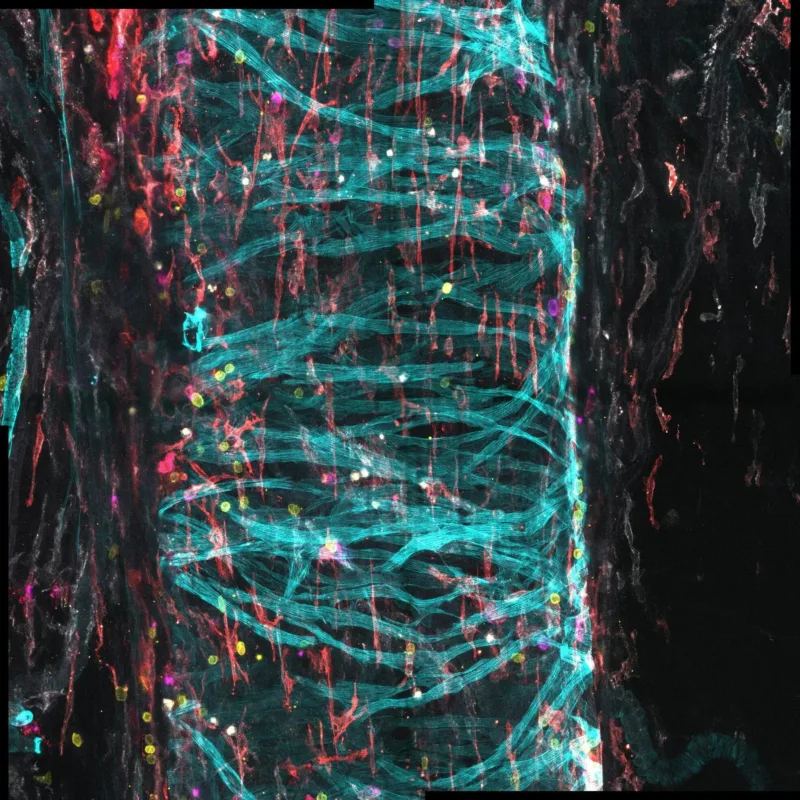
The K. Lisa Yang and Hock E. Tan Center for Molecular Therapeutics in Neuroscience aims to change how we treat brain disorders by developing innovative molecular tools that precisely target dysfunctional genetic, molecular, and circuit pathways.
Our Approach
The Yang-Tan Center brings together scientists and engineers to tackle pressing health challenges through the pursuit of innovative, interdisciplinary approaches. By combining fundamental discoveries in neuroscience and immunology with advanced imaging, mapping, and therapeutic technologies, we aim to uncover the biological mechanisms underlying disease and translate those insights into safer, more effective treatments for patients.
Founded in 2020, the center has already pioneered a range of transformative molecular technologies. These include compact, programmable gene-editing systems that simplify the delivery of genetic therapies and wireless magnetic nanodiscs capable of remotely stimulating the brain without implants.
All tools developed within the center are shared globally with academic and clinical researchers with the goal of bringing novel molecular tools to human clinical trials.
Co-Directors

Job Title Co-Director, K. Lisa Yang and Hock E. Tan Center for Molecular Therapeutics in Neuroscience
Our Research
The center’s current research focuses on four major areas: designing strategies to induce immune tolerance, developing new approaches for treating pain, mining powerful molecules from the natural world, and leveraging synthetic torpor and thalamic mapping to better understand and control brain networks involved in difficult-to-treat epilepsy. Together, these efforts reflect the center’s broader goal of developing precise technologies that can transform the treatment of neurological disease.
Immune Tolerance
Center researchers are developing therapeutic strategies to induce immune tolerance with the aim of combatting autoimmune disorders and allergic responses.
Drug Free Pain Treatment
Our scientists are uncovering the specific brain cell types, receptors, and neural circuits underlying anesthesia and pain toward a long-term goal of safer, more targeted anesthetics and non-sedating pain treatments.
Drug-Resistant Epilepsy
About 1.3 million Americans living with epilepsy experience disabling seizures despite standard-of-care medical therapy. The center is developing advanced brain-mapping tools to identify precise brain networks driving severe epilepsy and develop effective strategies for drug-resistant seizures.
Biomining
Center scientists are using artificial intelligence to systematically search the natural world for molecules that can be engineered into breakthrough tools for medicine, neuroscience, and scientific discovery.