Job Title Director of the Hock E. Tan and K. Lisa Yang Center for Autism Research
Hock E. Tan and K. Lisa Yang Center for Autism Research
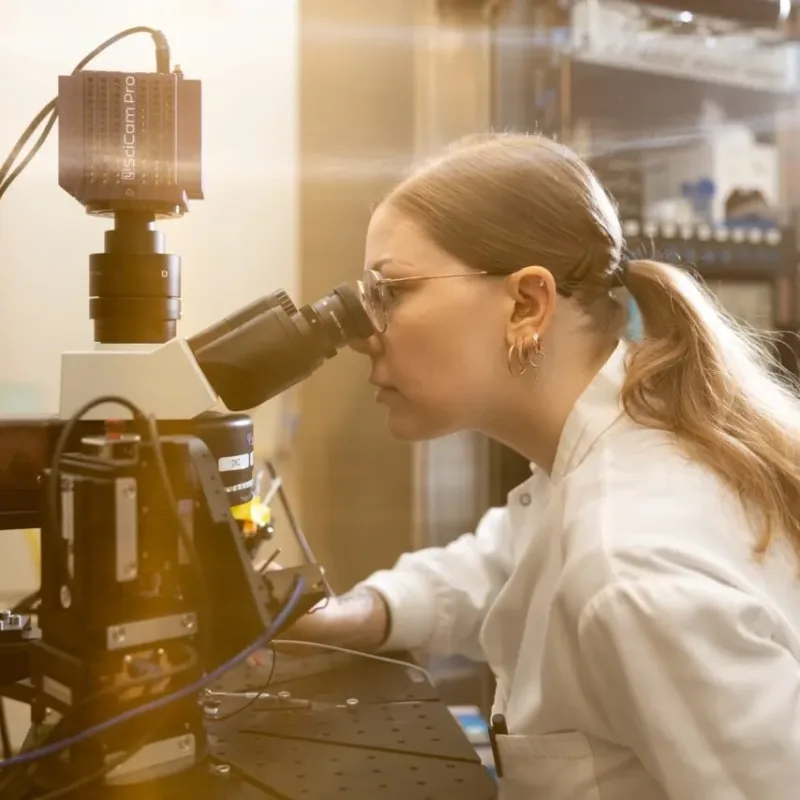
The Hock E. Tan and K. Lisa Yang Center for Autism Research seeks to distinguish biomarkers of autism spectrum disorders (ASD); understand these disorders at the molecular, cellular, and circuit levels in a variety of models and humans; and ultimately identify novel targets that will accelerate the development of autism therapy options by the private sector.
Our Approach
A desire to boost interdisciplinary and cutting-edge research into the genetic, biological, and neurological mechanisms underlying this intractable disorder led Lisa Yang and Hock Tan ’75 SM’75 to establish the Hock E. Tan and K. Lisa Yang Center for Autism Research at MIT in 2017. They founded the center to support and catalyze revolutionary new research approaches and potential treatments to improve the lives of individuals affected by this disorder.
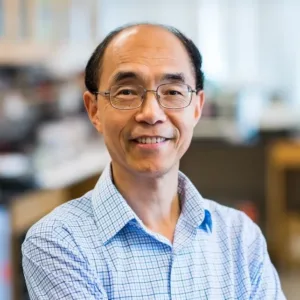
The center, headed by Guoping Feng, emphasizes visionary, innovative, and multidisciplinary approaches to ASD. A decade in, the center continues to fuel novel investigations that are too risky to be funded by traditional grants. This approach has resulted in the creation of a groundbreaking gene therapy for Phelan-McDermid syndrome, a severe form of autism spectrum disorder caused by mutations in the Shank3 gene. This gene therapy is now in a pediatric clinical trial led by Jaguar Therapeutics.
The MIT center partners closely with the Hock E. Tan and K. Lisa Yang Center for Autism Research at Harvard University, sharing a common scientific advisory board and fostering research collaborations across institutions.
The center’s current projects, highlighted below, reflect our core priorities: new disease models, advancing therapeutic approaches, and deepening our understanding of changes in the human brain.
Director
Our Research
The gift that founded the center came with an emphasis on visionary, innovative, and multidisciplinary approaches to ASD. These approaches, listed below, support the center’s core aim of understanding the genetic, biological and neural bases of ASD. The ultimate goal of the center is to identify novel targets that will accelerate the development of autism therapies by the private sector.
New Models
The Tan-Yang Center is developing non-human primate models of autism to study brain structure, social behavior, and cognitive changes that better reflect the human brain, helping us understand autism spectrum disorders and test new therapies.
Gene Therapy
Researchers are developing novel gene therapies for severe forms of ASD, including Phelan-McDermid syndrome caused by Shank3 mutations. FDA-authorized pediatric clinical trials began in 2025, marking one of the first gene therapy efforts targeting autism.
Human Studies
Scientists are using neuroimaging to study neural changes in autism and test interventions that improve quality of life. Recent studies examine mindfulness to reduce anxiety and reading interventions for autistic children with dyslexia, a common co-occurring condition.