Decoding the brain basis of autism
News Type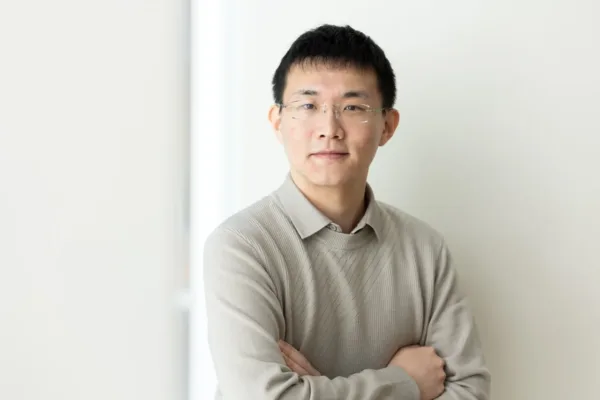


Di Sang’s interest in science was sparked early on, in the pages of a comic book about Marie Curie. Following her story from childhood to Nobel Prize was fascinating, and it helped him begin to imagine a career of his own in science. As a high school student in China, he excelled in physics competitions and thought that was where his path lay. But biology appealed to his innate curiosity more than physics did. “I was interested in experimental science, where I could directly explore and test a hypothesis. That led me to choose biology as my major, and I realized that I made the right choice,” he recalls.
As a graduate student at the National Institute of Biological Sciences in Beijing, Sang studied sleep deprivation and circadian rhythms, which led him to a molecule made in the brain that has a big impact on the immune system and physical health. He wanted to learn more about how aspects of our well-being are regulated by the brain and what can happen when things go wrong. Neuroscience was particularly attractive because it was a way to make a difference in people’s lives.
“Neurodevelopmental and neuropsychiatric disorders have a huge societal impact,” he says. “I wanted to do some translational study in that field because I think we can help a lot of individuals with those disorders.”
Sang is doing that as a J. Douglas Tan Postdoctoral Fellow within the Hock E. Tan and K. Lisa Yang Center for Autism Research at MIT. In the lab of Guoping Feng, he is working to understand the molecular interactions that shape social behavior in autism — and how those interactions can be modified therapeutically.
Sang says he’s enjoyed the dedication and collaborative spirit in the Feng lab, as well as life in Boston, with its blend of history and modern city energy. Its museums and other exhibitions hold a particular allure. He also enjoys Japanese animation and reading novels when he’s not in the lab.
Sang is working with a mouse model of autism developed in Feng’s lab. Due to a mutation in the autism-related gene SHANK3, the mice behave in ways that reflect the atypical social behaviors that are common in people with autism. Sang explains that SHANK3 mice tend to avoid interacting with unfamiliar mice, and functional brain imaging suggests that social interactions are stressful for the animals.
Hyperactivity in the brain quiets and the mice become more sociable when a key part of the brain’s NMDA receptors is blocked. Sang is working to deeply characterize the molecular interactions that mediate that change and understand the impact of those interactions on brain circuits so that researchers can better work out how they might target that circuitry for therapy.
Sang acknowledges that the careful, thorough study required to translate biological understanding to clinical advances can be frustratingly slow. “But we always keep on going,” he says. “We are always trying to develop some kind of therapies to help these individuals, and we are always pushing our thinking into reality.”