Healing bones faster, one step at a time
News Type


Samantha Gutierrez-Arango’s motivation for her research was born from tragedy. Her home country of Colombia has faced a pressing landmine crisis — generated from decades of warfare — that has injured or killed nearly 12,000 people. “Survivors often face long-term disabilities, requiring emergency care and rehabilitation,” she says. “Being exposed early to a massive unmet need inspired me to seek out engineering solutions that can enhance health and well-being.”
That motivation led her to study biomedical engineering at Tecnológico de Monterrey in Mexico, where she learned to create methods that bridge engineering and human-centered design. During an internship with Frederick Shic at Yale University, she devised a play-based assistive technology to study sensory processing in children with autism spectrum disorder. “That experience not only equipped me with skills in hardware design and hypothesis-driven research but also solidified my commitment to developing tailored clinical interventions,” she says. After graduating, she became a research assistant at Northeastern University and studied how wearable technologies can be used to promote physical and cognitive health in children with obesity.
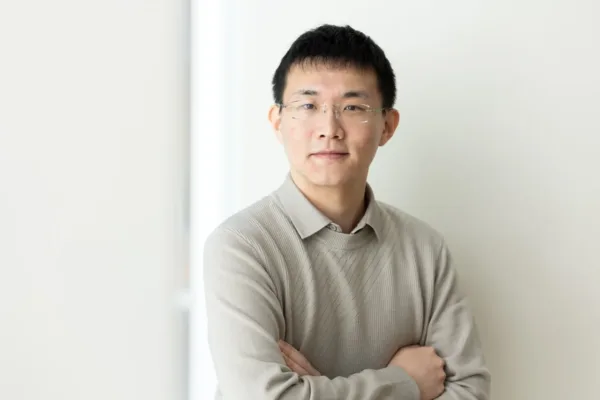
Gutierrez-Arango is now a graduate student in the Biomechatronics lab within the K. Lisa Yang Center for Bionics at MIT. She is using her engineering skills to explore how assistive devices could expedite healing for severe bone injuries that “significantly impair mobility and independence, increase muscle atrophy, prolong rehabilitation time, and impose tremendous financial and emotional burdens,” she says. While it is known that active recovery can promote bone health, researchers are still searching for the right balance of movement without causing further damage — and Gutierrez-Arango is intent on finding it.
Exploring bone-healing factors
When a bone is injured or broken, blood flow increases to the area to help repair the damage, and physical activity can support the healing process. But studying the individual factors that promote recovery has been challenging, because it’s extremely difficult to isolate them in traditional research settings. “We still don’t know if the increase in blood flow with active recovery is driven by putting weight on the injured limb or by the metabolic energy the body exerts when moving,” Gutierrez-Arango explains. She is turning to a high-tech bionic device — a powered ankle exoskeleton that can aid those who are injured, disabled, or aging — to untangle those effects.
The device supports the ankle, so a user spends less energy while also mechanically loading the ankle with the weight of their body and the exoskeleton. “Now we can finally separate those two factors. The exoskeleton allows us to see exactly what’s driving healing blood flow to the bone, which can inform the design of better rehabilitative programs for people recovering from often debilitating injuries,” says Gutierrez-Arango. A custom-built near-infrared spectroscopy system is helping her capture the physiological processes that occur with exoskeleton use. “It can penetrate deep into the bone at a level that no other technology can currently achieve,” she says.
If metabolic demand is the main driver, improving vascular health might be the optimal method for healing bones. But if mechanical loading is the key factor, rehabilitation strategies could focus more on load-bearing exercises. “The more we understand the human body and the way it heals, the better we can find the tools to support that process,” Gutierrez-Arango says. “I want to use that knowledge to one day build technology that doesn’t just assist movement but actually speeds up recovery, so that people can get back to the passions and the lives they love.”