Fixing dysfunctions in the developing brain
News Type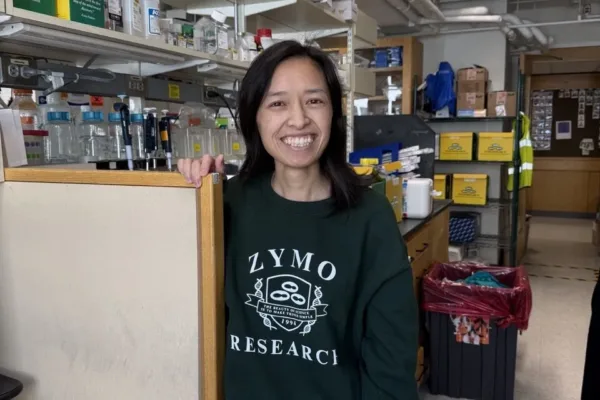


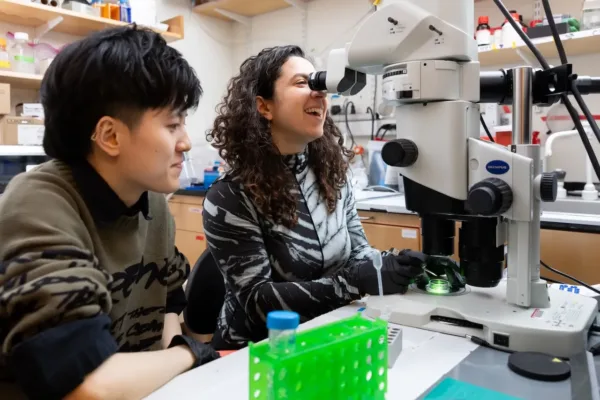
How does a single gene regulator shape the developing brain, and what happens when that control breaks down? Xiaoli “Sky” Wu is pursuing answers to those questions in the laboratory of Michael Greenberg, Nathan Marsh Pusey Professor of Neurobiology at Harvard Medical School and director of the Tan-Yang Center for Autism Research at Harvard. Wu studies ZMYND11, a gene regulator that, when mutated, causes an intellectual disability including developmental delay known as ZMYND11 disorder. Wu aims to understand the molecular mechanism underlying ZMYND11 disorder to define a new and powerful therapeutic strategy.
Wu grew up in a rural village in China during the height of the one-child policy, in a community with limited educational resources. Many people around her thought girls should stay home and do housework instead of going to school, and some of her female relatives left school early to support male siblings. Thanks to her mother’s insistence, Wu continued in school despite objections from other family members. She describes that opportunity as life-changing, because it allowed her to make decisions independently and to imagine a future in science that few people in her village could see.
As she moved from her village to larger cities and then to the United States, Wu often experienced culture shock. At each stage, mentors, peers, and colleagues helped her navigate unfamiliar academic systems. “I recognize the transformative impact that mentorship can have on underrepresented groups and individuals facing barriers,” she says. Those experiences have shaped her commitment to inclusivity and to a research environment that welcomes trainees from a wide range of backgrounds.
As a Y. Eva Tan Postdoctoral Fellow in the Greenberg lab, Wu is investigating how chromatin regulators shape neuronal development and how their dysfunctions are linked to various neuronal disorders. Specifically, Wu wants to know why mutations in the chromatin regulator ZMYND11 cause intellectual disability.
Preliminary studies completed by Wu and colleagues in the Greenberg lab have shown that ZMYND11 interacts with the histone methyltransferase MLL complex, a key gene regulatory complex that helps control gene expression. In healthy cells, ZMYND11 keeps MLL in check; however, neuronal deletion of ZMYND11 in mice disrupts this process, leading to hyperactivity and abnormal motor behavior. Interestingly, the team discovered that treatment with the clinically approved MLL-inhibitor drug revumenib can restore gene function. These results suggest that therapeutically targeting the MLL complex may be a promising treatment strategy for ZMYND11-related neurodevelopmental disorders.
Looking ahead, Wu wants her research and mentoring efforts to grow together. She credits a wide community of supporters — “strangers, friends, and mentors”— with helping her reach each new stage of her career. By mapping the ZMYND11-centric network in neurons and by supporting the next generation of scientists in the Greenberg lab and the broader scientific community, Wu aims to open new paths to treat neuronal disorders and build a more inclusive scientific community that can better understand them.